


Quick Answer
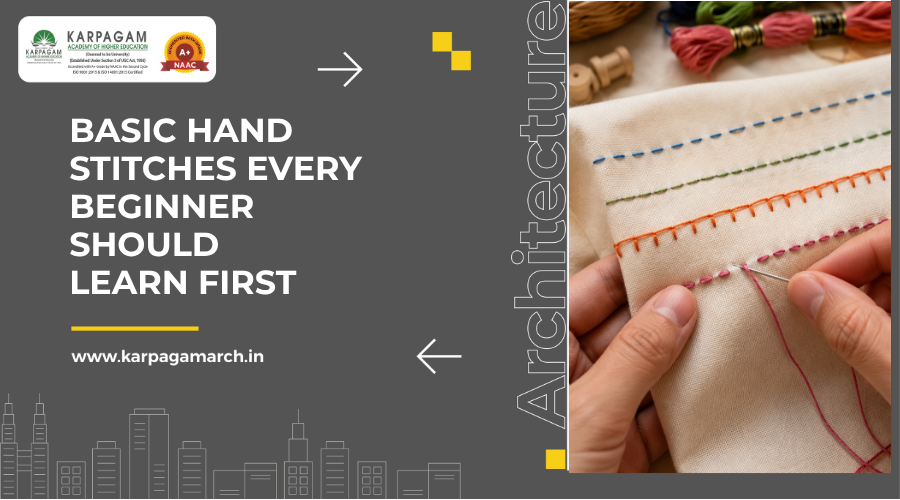
Hand stitching is an essential sewing skill that any novice, student, and DIY enthusiast should learn early on. The seven basic hand stitches running, back, basting, whip, overcast, blanket, and slip each have a specific function in sewing, embroidery, hemming, and repairs. Mastering these basic hand sewing stitches lays the groundwork for expert garment manufacturing and innovative fashion design.
Quick Overview Table
| Section | What You Will Learn |
| What Are Hand Stitches? | Definition of hand stitches and their role in fabric work |
| Why Learn Hand Stitches? | Benefits for beginners, students, and fashion design careers |
| Tools Needed | 7 essential tools: needle, thread, fabric, scissors, pins, tape, thimble |
| 7 Basic Hand Stitches | Running, back, basting, whip, overcast, blanket, and slip stitch |
| Applications | Sewing, embroidery, hemming, repairs – real-world uses for each stitch |
| Common Mistakes & Tips | Key errors to avoid and practice tips for neat, even stitching |
| Career Relevance | How hand stitching skills connect to fashion design education and jobs |
Table of Contents
- Introduction
- What Are Hand Stitches?
- Importance of Learning Hand Stitches for Beginners and Fashion Students
- Basic Tools Needed for Hand Stitching
- Overview of 7 Basic Hand Stitches
- Detailed Explanation of Each Basic Hand Stitch
- Hand Stitches Used in Sewing, Embroidery, Hemming and Repairs
- Difference Between Hand Stitching and Machine Stitching
- Common Mistakes Beginners Make While Learning Hand Stitches
- Tips to Practice Hand Stitches Neatly
- Why Hand Stitching Skills Matter in Fashion Design
- Career and Learning Scope for Students Interested in Sewing and Fashion Design
- Conclusion
- FAQs
Introduction
Sewing by hand is one of the oldest and most valuable skills anyone can master. Whether you’re a high school student interested in fashion design, a DIY enthusiast working on home projects, or a beginner looking to learn how to sew by hand, learning the proper stitches is essential. The 7 basic hand stitches are the foundation of all hand sewing, utilised in everything from clothing production to embroidery and rapid repairs. This guide explains and demonstrates each stitch in detail.
What Are Hand Stitches?
Hand stitches are techniques for connecting, finishing, and decorating fabric that involve manually pressing a threaded needle through layers of material. Unlike machine sewing, hand stitching allows the sewist complete control over tension, positioning, and intricacy.
Hand stitches have been used across cultures and skill levels, from ancient garment-making to modern fashion ateliers. They are used for sewing textiles, securing hems, closing apertures, attaching trimmings, and making decorative patterns.
Importance of Learning Hand Stitches for Beginners and Fashion Students
Learning to sew by hand at a young age has numerous practical and creative benefits. Here’s why this matters:
- Builds Core Skills
- Improves Precision
- Supports Repairs
- Fashion Design Foundation
- Creative Expression
Basic Tools Needed for Hand Stitching
Before you begin sewing step by step, grab the following tools:
- Needle
- Thread
- Fabric
- Scissors
- Pins
- Measuring Tape
- Thimble
Overview of 7 Basic Hand Stitches
Here’s a brief summary of the seven key sewing stitches every beginner should master before getting into further practice:
- Running Stitch
- Back Stitch
- Basting Stitch
- Whip Stitch
- Overcast Stitch
- Blanket Stitch
- Slip Stitch / Ladder Stitch
Detailed Explanation of Each Basic Hand Stitch
Running Stitch
The running stitch is the simplest of the fundamental stitches. It involves weaving the needle in and out of the fabric in a straight line, leaving equal-sized dashes of thread on each side.
- Step by step: Thread the needle, knot the end, and push it up through the fabric and down again at equal intervals. Repeat in a straight line.
- Main Applications: Gathering fabric, basting, quilting, and decorative stitching designs for beginners.
- Beginner Tip: Use a ruler or chalk line to ensure that your stitches are consistently spaced.
Back Stitch
The back stitch is the strongest hand stitch and the most similar to machine stitching. It is created by inserting the needle backwards into the preceding stitch before moving it forward again.
- Step by step: Bring the needle up, insert it one stitch length back, and then move it forward two stitch lengths. Continue with this pattern.
- Main Applications: Sewing clothing, fixing torn seams, and any project needing strong, long-lasting joins.
- Beginner Tip: Use constant stitch lengths for a tidy, professional finish.
Basting Stitch
The basting stitch is a long, loose variation of the running stitch used to provide a temporary grip. It is removed once the final stitching is finished, making it ideal for fitting and adjusting.
- Step by step: Before permanent sewing, use long, even threads usually 1/2 inch or more to hold layers of cloth together lightly.
- Main Applications: Fitting clothing, holding pleats and tucks in place, and aligning patterned textiles.
- Beginner Tip: Use a contrasting thread colour to make basting stitches easier to see and remove.
Whip Stitch
A whip stitch is a diagonal stitch that wraps around the edges of one or two pieces of fabric. It is easy to learn and quite useful for both functional and decorative purposes.
- Step by step: Align the two fabric edges. Insert the needle from back to front at an angle, wrapping the thread over the edge each time.
- Main Applications: Joining felt pieces, closing stuffed animals, completing edges, and basic embroidery stitches for craft projects.
- Beginner Tip: Keep the wrap angle consistent for a clean, uniform edge finish.
Overcast Stitch
The overcast stitch is used to seal fabric’s raw edges and prevent fraying. It is similar to the whip stitch, but is applied to a single fabric edge to enclose it perfectly.
- Step by step: Work along a single raw edge, looping the thread and putting the needle into the cloth at regular intervals near the edge.
- Main Applications: Finishing seam allowances, reducing fabric unwinding, and garment fabrication.
- Beginner Tip: Work toward the edge, but not so close that the cloth tears under tension.
Blanket Stitch / Buttonhole Stitch
The blanket stitch results in a looped edge that is both useful and attractive. It is commonly used on blankets, felt, and buttonholes, and is a popular choice for hand sewing due to its clean appearance.
- Step by step: Bring the needle up through the fabric edge, loop the thread under the needle tip, and pull through to create a locked loop. Repeat along the edge.
- Main Applications: Finishing blanket and felt edges, creating buttonholes, and decorative border stitching.
- Beginner Tip: Space the loops evenly roughly 5mm is adequate for most fabrics.
Slip Stitch / Ladder Stitch
The slip stitch is a nearly invisible stitch used to seal seams on the exterior or fix folded hems. The ladder-stitch version is perfect for precisely sealing openings in stuffed cushions, toys, and clothing.
- Step by step: Fold the seam allowances on both sides. Pick up a couple of threads from each folded edge, work along the opening, and pull the thread closed.
- Main Applications: Closing cushion seams, hemming lining fabrics, and glueing folded edges to flat cloth.
- Beginner Tip: Gently pull the thread until the seam closes without puckering.
Also read: https://karpagamarch.in/the-digital-stitch-3d-fashion-tools/
Hand Stitches Used in Sewing, Embroidery, Hemming and Repairs
Each stitch requires its own application area. Understanding how to stitch effectively for the right goal increases the effectiveness of your work.
- Seaming fabric pieces – Back Stitch, Running Stitch
- Hemming garments – Slip Stitch, Running Stitch
- Finishing raw edges – Overcast Stitch, Blanket Stitch
- Joining craft pieces – Whip Stitch, Blanket Stitch
- Temporary fitting – Basting Stitch
- Closing openings – Slip Stitch / Ladder Stitch
- Hand embroidery stitches – Running Stitch, Back Stitch, Blanket Stitch
Also read: https://karpagamarch.in/garment-construction-guide-beginners/
Difference Between Hand Stitching and Machine Stitching
Both approaches have their uses in garment manufacturing.
Here’s a simple comparison:
| Feature | Hand Stitching vs Machine Stitching |
| Speed | Hand stitching is slower; the machine is faster for large projects |
| Control | Hands give more control over curves and delicate fabrics |
| Portability | Hand sewing needs no equipment; a machine requires power and setup |
| Finishing Detail | Hand stitches are used for invisible finishes; a machine is used for structural seams |
| Learning Curve | Hand stitching is the ideal starting point for all sewing beginners |
Common Mistakes Beginners Make While Learning Hand Stitches
Avoiding the following common errors will drastically accelerate your progress:
- Uneven stitch lengths
- Pulling the thread too tightly
- Skipping the knot
- Using the wrong needle size
- Not pressing the fabric
Tips to Practice Hand Stitches Neatly
Developing a steady hand sewing practice habit can significantly improve the quality of your work.
- Begin with simple cotton fabric, which is stable and easy to work with.
- Using a hoop or frame, keep the fabric taut while practising basic embroidery techniques.
- Before going on to the next stitch, practise the previous one for at least 10 minutes.
- Keep a stitch sampler, a small piece of cloth with rows of each stitch for reference.
- Keep your needle angle consistent throughout all stitch types.
Why Hand Stitching Skills Matter in Fashion Designing
Hand stitching is more than simply a survival skill in the fashion design industry; it is also a creative tool. Couture clothing relies primarily on hand stitching for subtle finishing, structural detail, and ornamental elements.
Students who learn the seven basic hand stitches early receive an advantage in understanding how textiles behave, how seams should appear, and how to rectify mistakes without a machine. These skills are directly applicable to pattern work, draping, toile creation, and final garment assembly.
Career and Learning Scope for Students Interested in Sewing and Fashion Design
If sewing and design interest you, there is a promising career path ahead. Skilled hand sewers are highly valued in fashion studios, costume design departments, textile arts, and fabric crafts.
Formal education at the best fashion designing college in Coimbatore includes structured learning that combines hand-stitching fundamentals with advanced pattern-making, garment technology, and design philosophy. Learning to sew by hand is the first step in pursuing a career in fashion retail, couture, costume design, or starting your own label.
Conclusion
Mastering the 7 basic hand stitches is the first and most gratifying stage in any sewing or fashion design project. From the simple running stitch to the invisible slip stitch, each method boosts your confidence and expands your creative possibilities.
Regular hand sewing practice, along with formal training, provides beginners and students with skills that will last a lifetime. Begin with one stitch today and work your way through the seven; your hands will thank you.
Turn your interest in stitching and garment creation into a professional skill.
Join our fashion design program and take your first step toward a creative future.
Frequently Asked Questions (FAQs)
1. What are the 7 basic hand stitches?
The seven basic hand stitches are: running stitch, back stitch, basting stitch, slip stitch, blanket stitch, whip stitch, and cross stitch.
2. Which hand stitch is easiest for beginners?
The running stitch is the most accessible hand stitch for beginners because it is simple and quick to learn.
3. What is the strongest hand stitch?
The backstitch is regarded as the strongest hand stitch because it produces a long-lasting, solid seam.
4. What is the difference between a running stitch and a back stitch?
A running stitch produces a series of evenly spaced stitches with gaps, whereas a backstitch overlaps stitches to create a stronger, more continuous line.
5. Can beginners learn hand stitching at home?
Yes, beginners can learn hand stitching at home with basic sewing supplies and experience.
6. Why are hand stitches important in fashion design?
Hand stitches are essential in fashion design because they aid in garment manufacturing, repairs, detailing, and finishing work.