


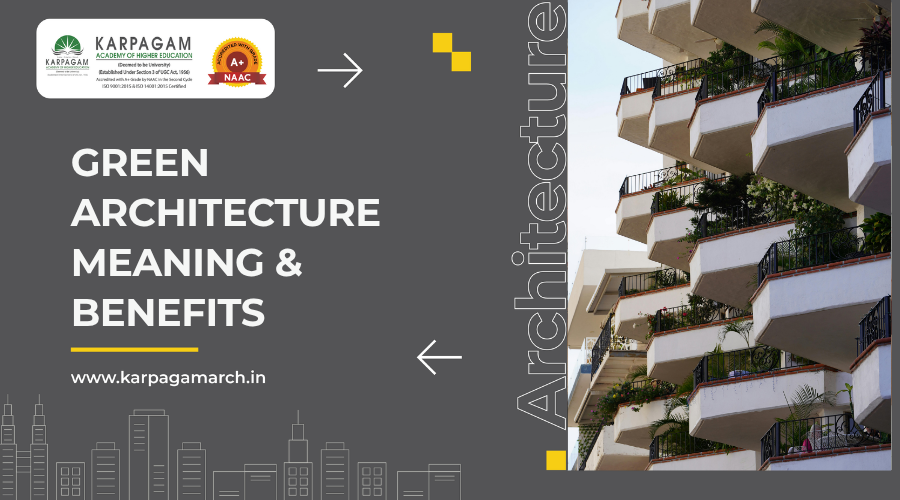
If you have ever looked at a building covered in plants, or noticed a structure that runs entirely on solar energy, you have already seen green architecture in action. It is one of the most relevant conversations happening in the world of design and construction today, and for good reason. As cities grow and climate concerns become harder to ignore, the way we build matters more than ever.
Whether you are an architecture student, someone preparing for B.Arch admissions, or simply curious about eco-friendly building design, this guide covers everything you need to know, from the core meaning and principles to real-world examples and materials.
Green Architecture: Meaning and Why It Matters Today
Green architecture, at its simplest, is about building smarter- designing spaces that do not cost the earth to run or maintain. It goes well beyond the idea of a rooftop garden or a solar panel bolted on as an afterthought. The way a building is planned, the materials that go into it, how it manages light and air, and how it holds up over decades all of this is part of what makes a building green.
The green architecture’s meaning goes beyond aesthetics. It asks architects and engineers to rethink every decision from which materials to source to how natural light enters a space. Buildings are responsible for a significant share of global energy consumption and carbon emissions. Green building architecture directly addresses this by designing structures that work with nature rather than against it.
Why does this matter right now? Because rapid urbanisation, resource depletion, and the climate crisis have made conventional construction methods unsustainable. Architects today are not just building for the present they are building for a future that demands accountability. This is exactly why the green architecture concept has moved from a niche idea to a mainstream necessity.
Principles and Characteristics of Green Architecture
Sustainable design concepts serve as a compass for every stage of a building’s life from site selection and construction to daily operation and eventual demolition. Here are the essentials:
1. Energy Efficiency
Green buildings are designed to minimise energy use. This includes proper insulation, high-performance windows, passive solar design, and the incorporation of renewable energy sources such as solar panels or small-scale wind systems. The aim is to lower reliance on fossil fuels while keeping indoor spaces comfortable.
2. Water Conservation
It also focuses on reducing water waste. Techniques like rainwater harvesting and greywater recycling allow buildings to capture, reuse, and manage water efficiently, an especially important consideration in water-scarce areas, including many regions of India.
3. Sustainable Site Planning
Where a building is located and how it interacts with its surroundings matter. Green architecture considers the natural landscape, orientation of the building with respect to sunlight, local climate, and the preservation of natural features like trees and water bodies.
4. Use of Eco-Friendly Materials
Materials chosen for green buildings are typically recycled, locally sourced, low in toxicity, and have a minimal carbon footprint during production. For example, bamboo, reclaimed wood, compressed earth blocks, and recycled steel.
5. Indoor Environmental Quality
A healthy building is one where people feel good. Green architecture focuses on natural ventilation, non-toxic finishes, adequate natural lighting, and acoustic comfort to improve the quality of life for people inside the building.
6. Waste Reduction
From construction waste management to designing for deconstruction (so buildings can be dismantled and materials reused), green architecture minimises landfill contribution at every stage.
The green architecture characteristics that tie all of this together are adaptability, resource efficiency, and a deep respect for both natural and human systems.
Benefits of Green Architecture in Modern Buildings
The benefits of architecture are felt across environmental, economic, and social dimensions. Let us break these down clearly.
Environmental Benefits
- Significant reduction in carbon emissions and greenhouse gases
- Lower energy and water consumption over the building’s lifetime
- Reduced urban heat island effect through green roofs and facades
- Protection of local biodiversity and ecosystems
Economic Benefits
- Lower operating costs due to reduced energy and water use
- Higher property value and stronger marketability
- Extended building lifespan through durable, quality materials
- Eligibility for green building certifications, attracting potential investors
Social and Health Benefits
- Better air quality and natural lighting improve occupant health and productivity.
- Thermally comfortable spaces reduce stress and improve well-being.
- Urban greening and green public spaces enhance community well-being.
For architecture students, understanding these benefits is not just academic; it shapes how you will approach design briefs and client conversations throughout your career.
Green Architecture Examples, Materials and Design Ideas
Inspiring Sustainable Designs
Real-world examples illustrate how green architecture principles are applied in practice.
- The Edge, Amsterdam: Often called the world’s greenest office building, it generates more energy than it uses through its solar panel systems and smart energy management.
- Bosco Verticale, Milan: A pair of residential towers featuring over 900 trees and 2,000 plants integrated into the facade, improving air quality and biodiversity in an urban setting.
- CEPT University, Ahmedabad: A leading example of sustainable design, created with climate-responsive passive strategies for the local hot and dry conditions.
- Infosys Campus, Pune: Recognised as one of India’s most sustainable campuses, featuring solar energy, rainwater harvesting, and efficient building envelopes.
Green Architecture in India
It is no longer a niche conversation; it is slowly becoming the norm. The Indian Green Building Council (IGBC) and Green Rating for Integrated Habitat Assessment (GRIHA) have provided developers and institutions with a clear framework for responsible building, and more projects are now designed with these ratings in mind from day one. Cities like Bengaluru, Hyderabad, and Pune are leading the way, with a growing number of LEED-certified and GRIHA-rated buildings redefining modern urban development.
For students studying at B Arch Colleges in Coimbatore and across Tamil Nadu, this is particularly relevant as the region’s tropical climate makes passive cooling, natural ventilation, and shading devices essential elements of any responsible design.
Green Architecture Materials
Choosing the right materials is one of the most practical aspects of sustainable design. Commonly used materials include:
- Bamboo: Fast-growing, strong, and biodegradable, making it ideal for structural and finishing uses.
- Reclaimed wood: Reduces demand for new timber while adding character to spaces.
- Fly ash bricks: A byproduct of thermal power plants, these bricks have a lower carbon footprint than conventional ones.
- Compressed Earth Blocks (CEB): Made from locally available soil, requiring minimal energy to produce
- Recycled steel and glass: Durable, endlessly recyclable, and widely used in modern green facades
- Green roofing systems: Layers of vegetation over waterproof membranes that insulate buildings and manage stormwater
Green Roof and Facade Architecture
Two of the most visually striking elements of green architecture design concepts are green roof architecture and green facade architecture. Green roofs, whether extensive (shallow soil, low plants) or intensive (deeper soil, trees, even gardens) regulate temperature, absorb rainwater, and support urban biodiversity. Green facades, on the other hand, involve climbing plants or modular planting panels attached to building exteriors, improving insulation and air quality while transforming the visual character of urban streetscapes.
Green Architecture vs Sustainable Architecture
This is one of the most commonly asked questions, and it is a fair one. The two terms are often used interchangeably, but they are not identical.
The difference between green and sustainable architecture largely comes down to scope. Green architecture focuses primarily on the environmental performance of a building, energy use, water efficiency, material choices, and site impact. It is essentially the environmental pillar of sustainability applied to building design.
Sustainable architecture, by contrast, takes a broader view. It encompasses environmental responsibility but also social equity and economic viability the classic triple bottom line. A sustainable building considers not just how it performs environmentally, but also whether it serves the community, supports local economies, and remains viable over the long term.
In practice, green architecture is often a subset or starting point of sustainable architecture. A building can be green without being fully sustainable if it ignores social or economic dimensions. The most thoughtful projects today aim to achieve both.
Conclusion
Green architecture is far more than a design trend; it is a fundamental shift in how we think about buildings and their relationship with the world. From energy-efficient systems and eco-friendly materials to living walls and intelligent site planning, it brings together creativity and responsibility in ways that matter deeply for our planet’s future.
For architecture students, learning green architecture principles and practices early gives you an edge as a designer who understands how all aspects of a project fit together. The environments we build influence the lives, work, and interactions of billions of people. Designing with care and intention isn’t optional, it’s the essence of great architecture.
Admissions Open for Architecture Programs 2026–27 Learn green architecture principles and build a future-ready design career
Frequently Asked Questions (FAQs)
1. What is green architecture?
Green architecture is a design approach focused on creating buildings that are environmentally responsible, energy-efficient, and sustainable while promoting the well-being of occupants. It emphasises thoughtful decision-making throughout the process, from selecting the site and materials to construction techniques and building operations — to minimise environmental harm.
2. What are the principles of green architecture?
The core principles include energy efficiency, water conservation, sustainable site planning, use of eco-friendly materials, indoor environmental quality, and waste reduction. These principles guide every design decision in a green building, from orientation and insulation to ventilation and landscaping.
3. What are the benefits of green architecture?
Green buildings deliver environmental benefits like reduced carbon emissions and lower energy consumption, economic benefits like lower utility bills and higher property values, and social benefits like improved indoor air quality and better occupant well-being. Over a building’s lifetime, these advantages compound significantly.
4. How is green architecture different from sustainable architecture?
Green architecture focuses specifically on the environmental performance of a building’s energy, water, materials, and site. Sustainable architecture is a broader concept that also includes social equity and economic viability. Think of green architecture as one important dimension within the larger framework of sustainability.
5. What materials are commonly used in green architecture?
Common materials include bamboo, reclaimed wood, fly ash bricks, compressed earth blocks, recycled steel, low-VOC paints and finishes, and green roofing systems. The best choice depends on the local climate, availability of materials, and the specific environmental goals of the project.